Why Your Strategic Plan Is Keeping You Stuck

This cat has had enough of planning and is ready to start doing! And I’m right there with her.
Ready to jump to the solution? Download the free 30-Day Experiment Design Kit now.
It was the first strategic plan for this group. A statewide funder and advocacy organization. After a 6-month strategic planning process including stakeholder surveys, working groups, staff retreats, board retreats, and over 40 hours of staff time writing the document, they finally had their inaugural strategic plan. It was approved by their Board of Directors on February 20, 2020.
In less than a month, it was pretty much obsolete.
Over the next 12 months the organization faced the near-constant headwinds of the pandemic, the shifting political landscape, and foundations and funders shifting priorities or sometimes pulling back funding altogether. In the midst of the chaos, staff scrambled to keep the organization afloat and manage crises.
"The best thing about our strategic plan was that it gave us a list of things we decided not to do anymore," said the director who managed the strategic plan.
Over the last 5 years nonprofit and mission-based organizations have learned over and over is that long-term planning is almost impossible. In order to stay relevant they need to remain nimble and flexible.
Unfortunately, the way we develop strategy has been slow to catch up, and there are four big problems with this.
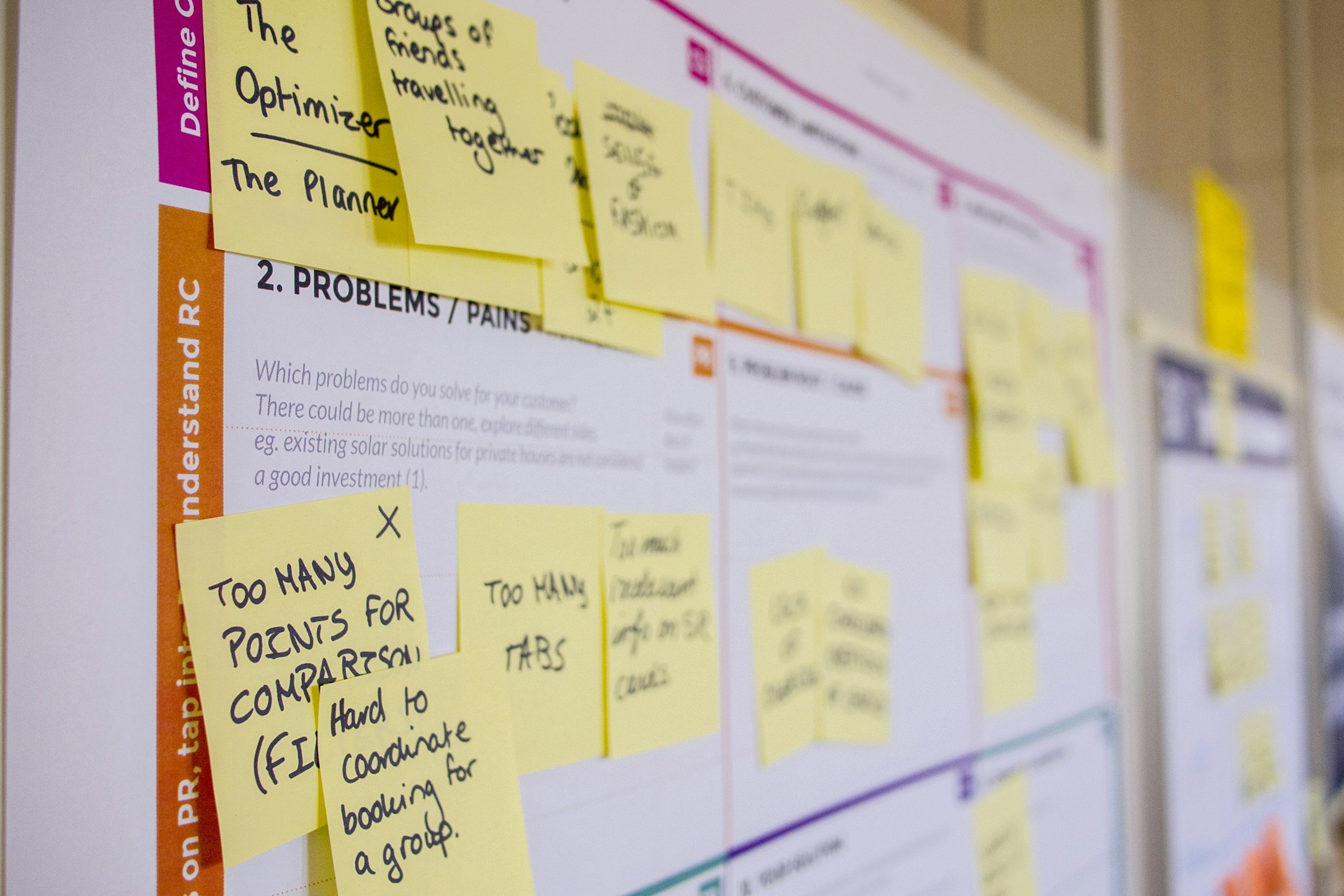
Problem # 1
Planning Has Become Procrastination in Disguise
Planning is an excellent way to feel and appear very busy. I call this plancrastinating.
You're telling yourself "We need to get this right before we start" or "We can't move forward until we know what XYZ stakeholders think." It’s great to want to get things right. Including important voices, especially traditionally marginalized voices in the decision-making process, is a great practice and a good instinct. But when taken too far, asking for perspectives from more and more voices becomes a substitute for actual decision-making.
Too often what we call "due diligence" is just covering up perfectionism. We think that if we just planned enough we can force a perfect outcome. Perfectionism is often praised as the pursuit of excellence, driving toward greatness. But it gets in the way of action, creativity, discovery, and learning. At its core, perfectionism is just good old-fashioned fear dressed up with a $50 lipstick.
There is no amount of planning that can account for every possible problem you may encounter. The fastest way to learn if an idea will work is to try it, test it, and learn from it. Testing is the real work of strategy. Inevitably, some of those ideas you test will fail—but it's through those failures that you will understand what works.

Problem #2:
By the Time You're Done Planning, Everything Has Changed
The rest of the world won’t wait for you to finish your 9 month strategic planning process. Political landscapes shift. Funders change their priorities. Novel viruses completely upend society.
By the time you're done planning, much of the context around you has shifted. We need modes of developing strategy that are flexible enough to respond in real time to the shifting landscapes. While we’re waiting and planning, the communities we serve are impacted by that shifting landscape, and we fail to meet their present needs.

Problem #3
Strategic Plans Try to Do Everything
I often see strategic plans that have 12 goals, 45 subgoals, over 150 tactics, and an equally boggling number of KPIs (key performance indicators).
Organization feel pressure to put everything into the plan because these planning processes are expensive and take so long. These strategic plans try to solve every problem the organization or community has ever faced, all at once. They become an overfull Christmas tree where every major funder, donor, board member, and senior leader hangs their own pet projects.
While some funders and board members may be impressed by how "comprehensive" and "ambitious" these plans appear, in reality they're often not grounded in reality, feasibility, or impact.
Often, the most important strategic decisions are the ones you decide NOT to do.

Problem #4
The Plan Lives in a Document, Not in Your Team
"We spent months on this strategic planning process and it just sits in a file somewhere. I don't even know the last time we looked at it."
I hear this all the time. You’ve probably said it yourself.
Too often strategic plans are just static plans no one revisits. Maybe once a year a funder or board member asks "How are you doing on your strategic goals?" and someone scrambles to update a long-forgotten, but very fancy, spreadsheet a consultant built. Or program managers try to shoehorn the same program they've been running for a decade into something new and shiny, dressing up old statistics as a new strategic goal to impress funders.
No one is looking back at the plan or actually integrating the goals into the work they're currently doing. Decisions are made based on whoever shouts the loudest, habit, or just vibes.
The strategic planning process didn't deliver on alignment or strategy. It was a deliverable in a grant report.
Ready to jump to the solution? Download the free 30-Day Experiment Design Kit now.
From Plancrastination to Experimentation
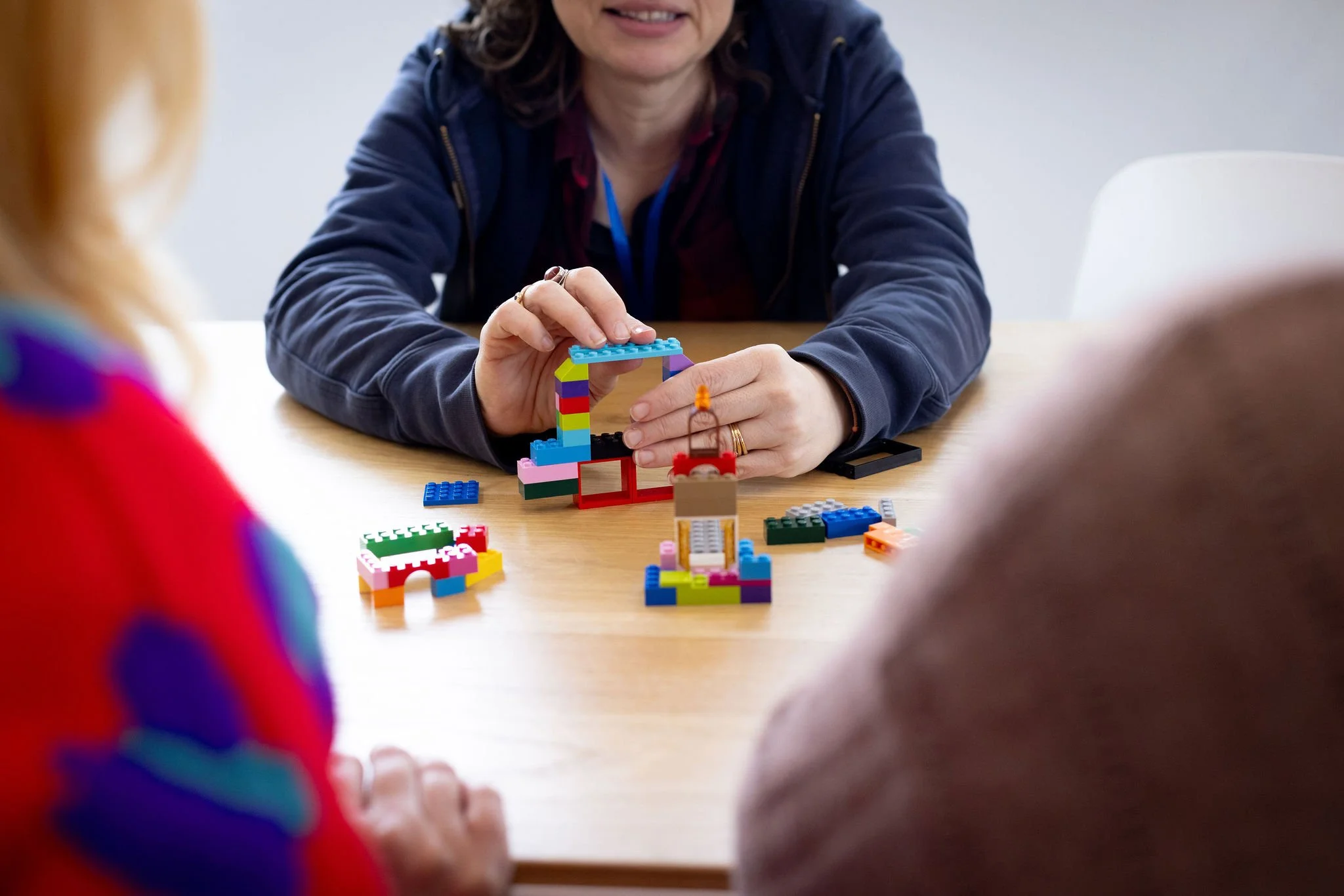
What looks like play can be serious work…and what looks like work is often just dragging your feet…
This doesn’t have to be the way you do things.
Instead of: "Let's spend 6 months planning the perfect program, then launch it."
Try: "Let's spend 2 weeks planning a 30-day experiment, see what we learn, then adjust."
You don't need a perfect plan to start taking action. All you need is a good-enough plan and the courage to start. You will learn so much more by actually doing small-scale experiments than you can ever learn from months of planning, research, or stakeholder interviews.
You start with a plan that has 50-60% clarity and a lot of questions. The cycle goes like this:
Include the necessary voices and perspectives to generate ideas → Make a Choice → Test It → Evaluate It → Adjust → Try Again
The question you want to be asking yourself is "What is the smallest scale experiment that I can do to make forward progress on this goal?"
Here are a couple examples of what this can look like in real life.
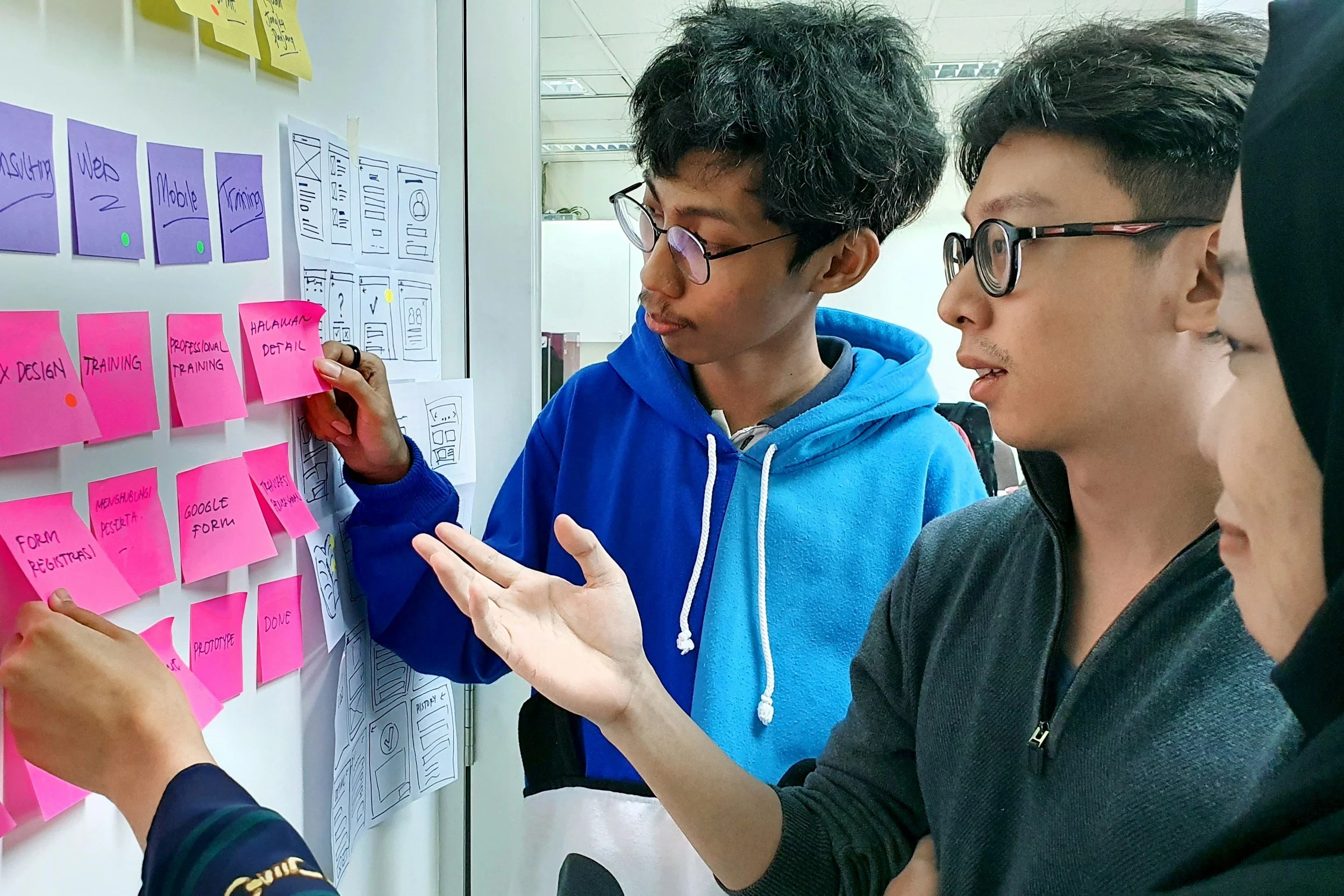
9-Month Strategic Planning Becomes 2-Day Strategy Sprint
An advocacy organization I worked with changed how they approached strategy. Rather than the typical 9-month strategic planning process, they did a two-day Strategy Sprint. In this session they were able to align on values, establish a long-term goal, and select three key priorities.
One of those very ambitious goals was to be a household name in their state within 2 years. There are a lot of ways to approach this, but since they didn't have the resources for a massive PR campaign or to hire a 5-person communications team, they took a smaller first step.
They chose to start testing different messages on social media. After 30 days they saw what kinds of posts gained traction and doubled down on them for the next 30 days. After 60 days they had clear data on what worked and what didn't. They used that data to make choices about how to leverage this new visibility to meet their other advocacy goals.
They picked a goal, came up with a small-scale test, learned what worked and what didn't, and continued to adjust as they applied what they learned.
Make it stand out
Prototyping Beats Massive Projects That Miss the Mark
Before I changed my approach to program design, I worked on a project to create an incredibly rich and comprehensive digital toolkit for social service providers to discuss reproductive health needs with their clients and connect them to services. We spent over a year working on this toolkit and in the end we had a beautiful website.
And no one used it.
If I were to do it all over again, I'd approach it completely differently.
I'd spend a couple days with the project team to define our goal and generate a couple ideas. Then we'd build a small prototype. We'd test it with 5-10 partners and get their feedback. Within 2 weeks we'd have information on what our audience would have actually used and then iterate from there. In the same 12 months we spent making our original toolkit, we could have had two to three rounds of updates and a tool that would help us meet our goals.
Instead of Comprehensive Needs Assessment, Start with Community Voices and What You Already Know
If you're already working in communities that you want to impact, you already have a wealth of knowledge and experience to draw from. Include the community in your planning from the beginning.
While comprehensive needs assessments can be valuable for gathering statistics, they take months to complete, and by the time they're done, you still have to figure out what you're going to do with that data.
Using tools like empathy mapping and including community partners in your planning sessions help you center the needs of the community while you create your project experiments. Launch a small pilot and assess its impact. You can course-correct as you go.
“Yeah, but what about…”
There are many reasons organizations still approach strategic planning like they did a decade ago. Here are some of the things I hear the most:
"Our funders expect a strategic plan…" Here's the thing: The entire landscape around nonprofit and mission-driven work is shaky right now. Funders know this. What they actually need from you isn't a perfect prediction of the next three years—it's an organization that can adapt when things change. Give them a strategic direction with clear experiments. Show them you're building the muscle to be nimble before you need it.
Because here's what experimenting does for you:
It Builds Your Adaptation Muscle: Running small experiments now—when things are relatively stable—prepares you to pivot quickly when the ground shifts again. And it will shift. We’ve all learned that lesson in the last five years.
It Generates Reusable Data: The experiment you run today might not solve today's problem perfectly, but that data becomes incredibly valuable when circumstances change. You're not just solving for now—you're building a knowledge base that helps you respond faster later.
When you talk to your funder say “We're taking an adaptive approach. We have a clear direction, and we're running focused experiments to test our assumptions and build our capacity to respond to changing conditions. We're not trying to predict the future—we're building the muscle to adapt to it."
Most funders—the good ones anyway—will see the inherent value in this. And if they don't? That tells you something important about whether this is the right funder for you. (pst…if you’re a funder reading this, I’d be happy to discuss this any time).
"We can't afford to make mistakes…" You're making mistakes all the time—you just don't know it yet because you haven't tested anything.
Small experiments = cheap mistakes.
Launching without testing = expensive mistakes.
You can't afford NOT to experiment. The question isn't whether you'll make mistakes. It's whether you'll make small, contained, learning-rich mistakes now, or massive, resource-draining mistakes later.
"This sounds chaotic and unstructured…" Actually, experiments with clear timelines, metrics, and decision points are more structured than pretending your 3-year strategic plan won't change.
What's chaotic is reacting to change without having built muscle for adaptation. What's structured is having a repeatable process for testing, learning, and adjusting. This approach creates the infrastructure to handle chaos.
"We need buy-in from stakeholders first..." Experiments create buy-in better than plans. When stakeholders see results in 30 days (vs. reading a 40-page document), they're more invested. Include them in the experiment and they'll help shape it. Co-creation seeds stakeholder commitment.
"Our organization is not set up for this..." Start anyway. You do not need organizational permission to run a small test. Pick one thing and do it. Show the results. Build the muscle. Prove it works. Then expand. Action drives toward action. The only way to become an organization that experiments is to start experimenting.
How Do I Get Out of Planning Mode?
If you're stuck in planning mode, here are a few quick things you can try to bust out of plancrastination and start taking action.
Ask yourself "What's the smallest version of this we could test in 30 days?" This is small. Like really small. You want this action to be small enough that there is no fear that will keep you from doing it. And once that's done, reflect on what worked, what didn't, and then do the next small action. Action drives toward action.
Get aligned on values and vision. You need to make sure that your team is all on the same page with where you're heading. But you can do this in a 1-day workshop—it doesn't need to be a 9-month process.
Pick ONE thing to experiment with. Nonprofit leaders are ambitious and optimistic. But this is where limiting yourself will have better outcomes down the road. Focus on ONE thing you're going to experiment with, otherwise you'll burn out and lose direction.
Set a clear deadline. This is a short-term experiment, 30 days max. Set a date for follow-up and assign someone who is responsible for running the experiment.
Define success. Be clear about what you're trying to accomplish and what you want to learn. What will tell you whether this experiment worked or didn't work? Be sure that the experiment is set up in a way that guarantees that's the question you're really asking.
Build in evaluation. On day 30, gather the team. Discuss what worked, what didn't, and what could be next.
Do it again with what you learned from the first experiment.
Want help?
Download the free guide: "The 30-Day Experiment Design Kit”
Send me an email at hello@thejustcollaborative.com and we can discuss your challenges.